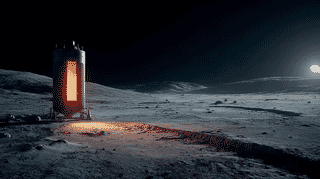
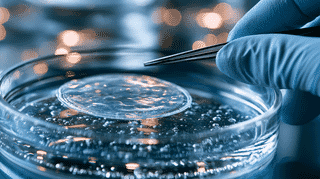
Japanese researchers heated hematite to 1,200°C in a hard vacuum and pulled 0.03 grams of oxygen from 1 gram without melting it. Lunar soil is still only a calculation. How it compares with ESA and NASA methods.
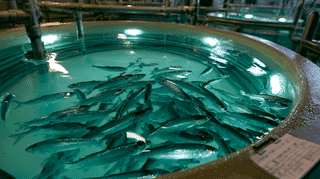
Murakami's salmon run fell from 55,000 fish to 1,400 in a decade. Now the town is spending about $32,000 to attempt what Norway and Chile have not: closing the life cycle of chum salmon entirely on land.
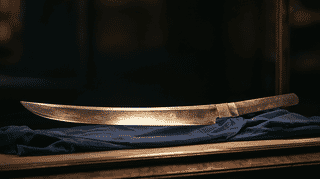
A lump of iron from a Toyama riverbed turned out to be a meteorite. Enomoto Takeaki had five swords forged from it in 1898, and the same rock later served as a reference for researchers analysing Tutankhamun's dagger.
In spring 2026, Honda wrote off roughly $10 billion in EV development. That same season, US ITER closed out the supply of ITER's 1,000-tonne central solenoid, the UK's Pulsar Fusion ignited the first plasma inside a fusion rocket engine, and Kyoto Fusioneering pushed on with its integrated fusion fuel cycle test facility in Canada. Stack the candidates in watt-hours per kilo and the picture is brutal: nothing beats gasoline in a form you can put in a car, except one category up, where fusion sits at 7.8 million times the density. Win the bet and you unlock effectively free electricity, working climate reversal, Mars in two months, lunar helium-3, and the solar system as a shipping route. Honda's mistake alone covers nearly 40 percent of ITER's budget. Maybe it's time to stop arguing about EVs and just go build the sun.
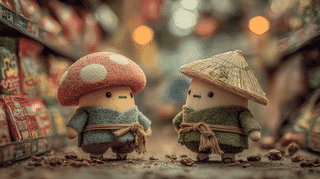
Japan is famously polytheistic and its gods rarely clash, unless the subject is mushroom-shaped versus bamboo shoot-shaped chocolate snacks. Inside the 50-year rivalry between Meiji's Kinoko no Yama and Takenoko no Sato: national elections, a celebrity-led campaign, a peace treaty, and why this debate can break friendships.
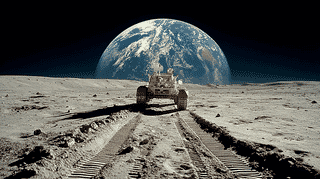
With Artemis II home safely, we look at Japan's contributions to lunar exploration: Toyota's Lunar Cruiser, MHI's regenerative fuel cells, Bridgestone's lunar tires, and the rest of the hardware keeping crews alive on the Moon.
Eureka Seven turned 20. Three key staff members all making their debut, the origin stories of Mamoru Miyano and Ami Koshimizu, and proof that the Itano Circus works without missiles: five reasons to watch this underrated 2005 series, backed by the creators' own anniversary comments.
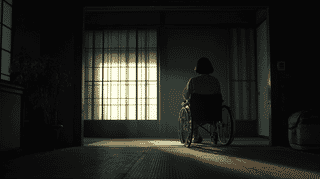
A 58-year-old mother who cared for her severely disabled daughter alone for 29 years was arrested after an attempted murder-suicide in Chiba, Japan. With approximately 40 caregiver-related killings reported annually, this article examines landmark cases and asks the world: is this a crime society should bear?
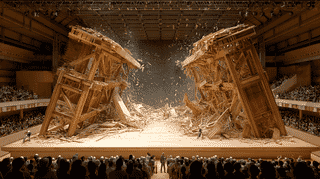
Two wooden walls are bolted down and pulled against each other until one breaks. That is the Kabe-1 Grand Prix, where universities, construction giants and home builders compete for the title of Japan's strongest shear wall. Born after the 1995 Kobe earthquake, it doubles as a public destructive test. Here is how it works and how the 2025 tournament went.
A TOHO producer pitched 'Maomao's Atelier' to Gust, which agreed almost at once. The False Imperial Brother is a mystery adventure in which brewed medicine re-creates crimes. Out March 18, 2027, in Japan and the West.
H3 flight No. 10 sent MMX toward Mars on Oct. 20, 2026 JST. With Mars Sample Return stalled, NASA's only contracted Mars-system sample is its share of at least 15% of the Phobos soil due in 2031.
On September 29, 2026, Japan's iPS cell heart sheet RiHEART reached its first insured patient. It costs 53.2 million yen, and two of eight trial patients met its main goal. Now 75 cases must show it works.
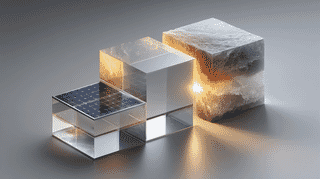
AIST's gamma-ray battery turns a crystal's glow into electricity and holds no radioactive material. Inside a Fukushima Daiichi storage facility it made about 1 microwatt and sent radio data for hours.
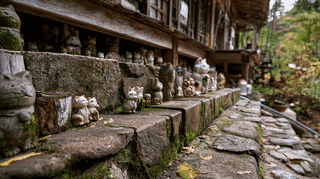
A temple in Hagi with more than 1,000 cat figurines offers a 1,000-yen charm against harassment. It shows a dog, for a reason hidden in the word 'harass', and it is meant to calm whoever is about to snap.
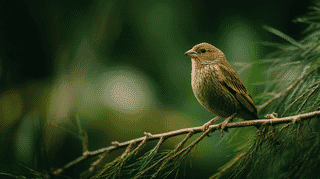
About 200 Ogasawara greenfinches remain in the wild. In 2026, 16 chicks fledged in captivity, five from captive-born parents. Why the bird now nests in an introduced tree, and what kākāpō and ʻalalā show about release.
Sakurai says ranking games is wrong, yet he ran Japan's Game Designers Award for 17 editions. Why he kept it going, and why it ended with no successor. Of its 17 winners, 15 were made outside Japan.
In 1926, a well drilled for oil in Hokkaido hit hot water. Toyotomi Onsen smells of petroleum, and guests treating skin conditions made up about 40 percent of its overnight stays in fiscal 2019.
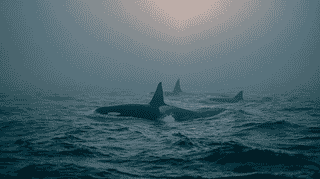
A white male orca first seen off Rausu in 2019 returned in thick fog in June 2026. About 1 in 1,000 orcas in the western North Pacific is white, and genetics hint at why.